Press Play
Co-Founder, Creative Director
In the midst of working together on our project Gratiu– CEO Tina Houser approached me with a new idea and an invitation to partner with her as lead designer and project manager. She introduced me to fellow co-founder and executive director Rich Taylor who was ready to start moving on the project immediately.
Eventually, as Press Play gained momentum we focused on it completely and development on Gratiu went on hiatus.
Tina’s new premise was simple: A dating app based on music.
Research
Fresh off our first app experience, Tina and I knew we wanted to improve on our process and implement what we learned.
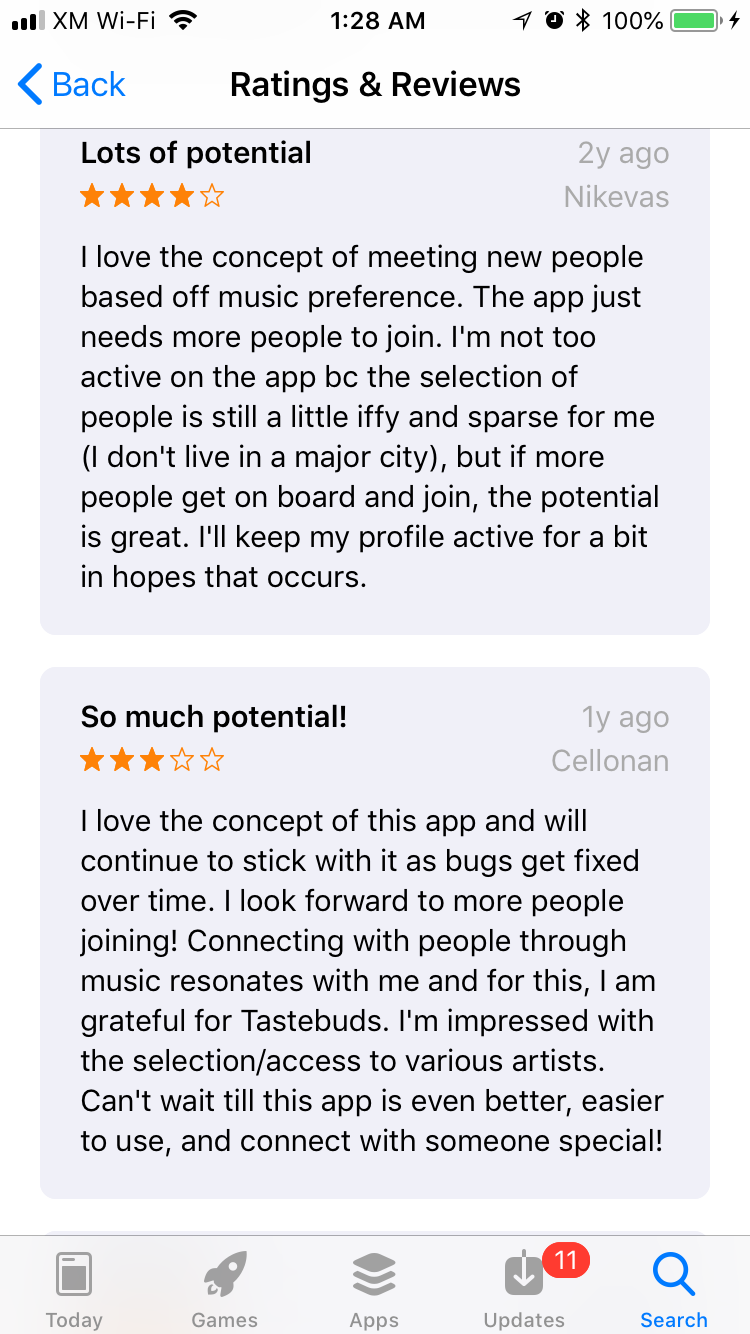
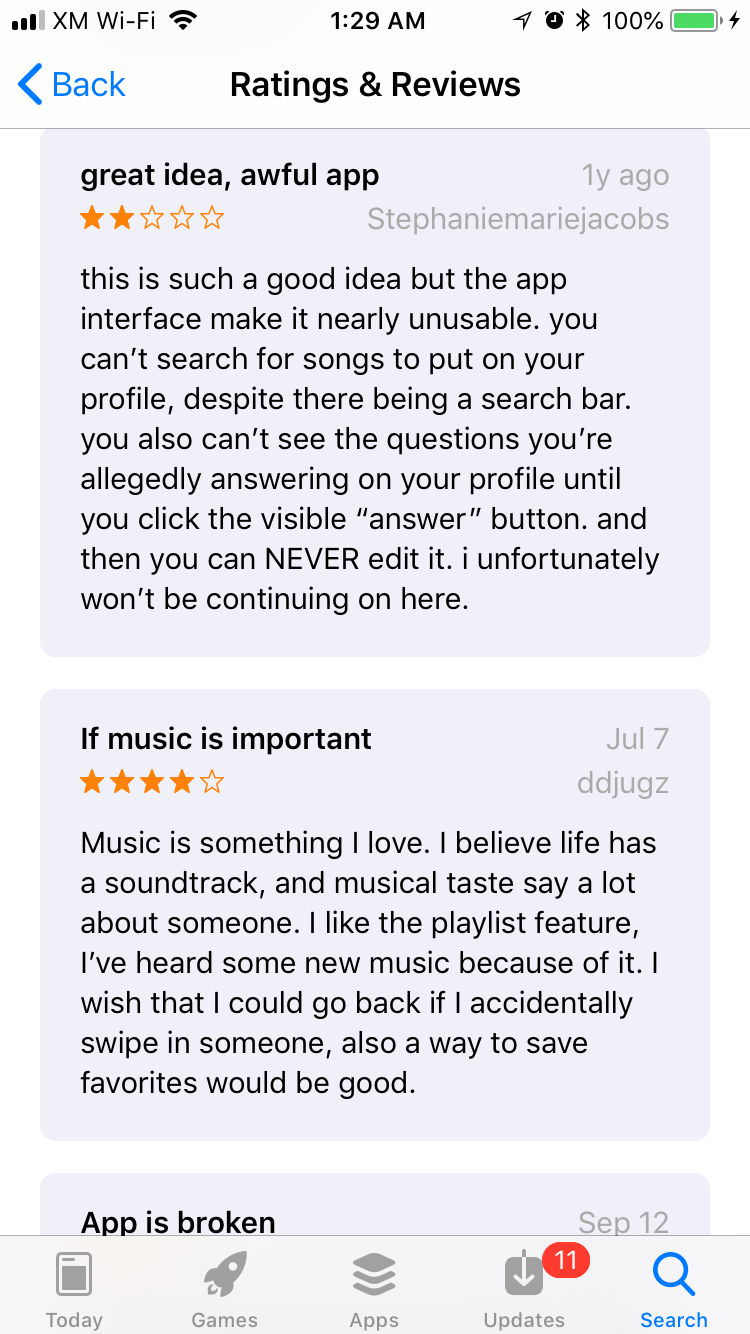
I began by researching our competition – what dating apps are people using, how do people connect through music digitally, and of the music-based dating apps out there, what was working and what wasn’t?
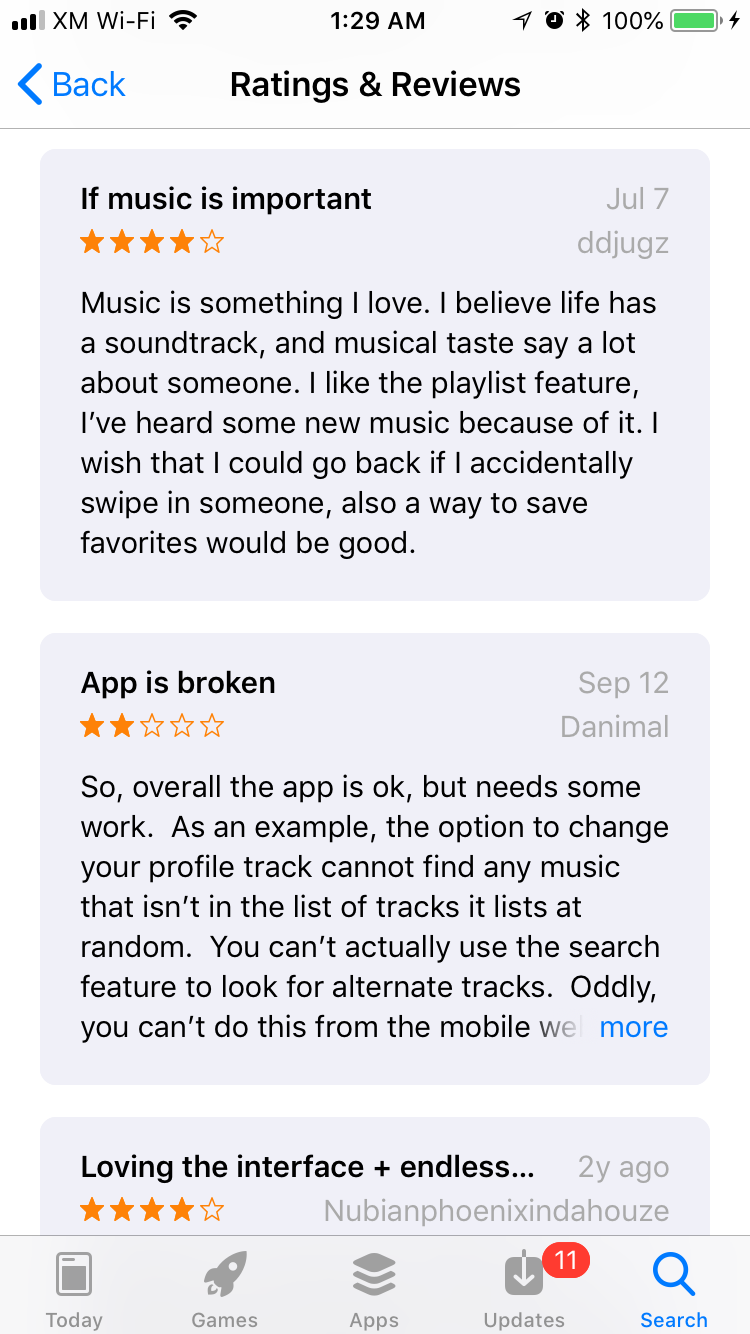
I downloaded, explored, and took notes on dozens of applications. I found app store reviews extremely helpful in determining what our target users were looking for. I was encouraged to see many music/dating apps were receiving 4+ stars despite being unusable based on the concept alone.
We spent 6-8 weeks researching, visioning, and defining our product.
I created a master file which included everything from our ethos, to our audience, and to our projected features at launch.
App Map
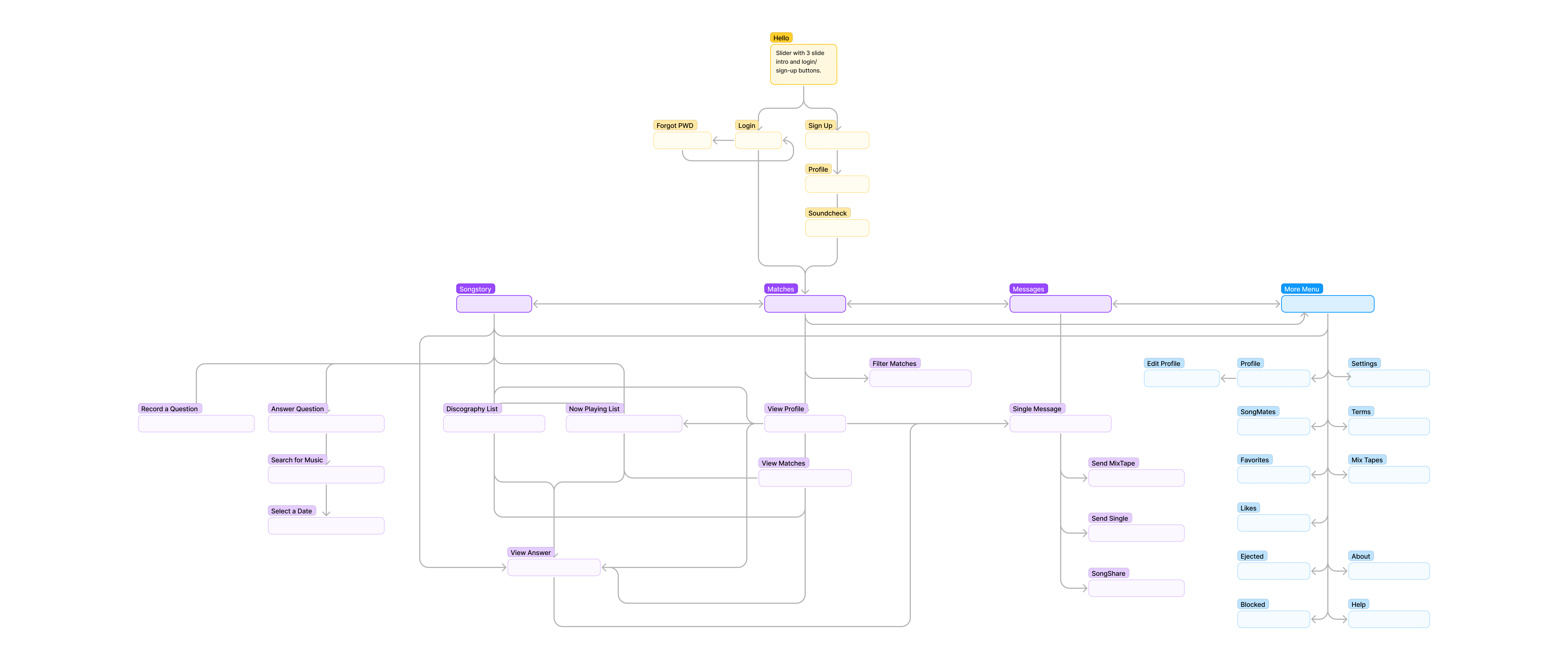
Based on our team discussion and the feature list we developed through user research, I outlined the original flow of the app.
Design
The Wireframe
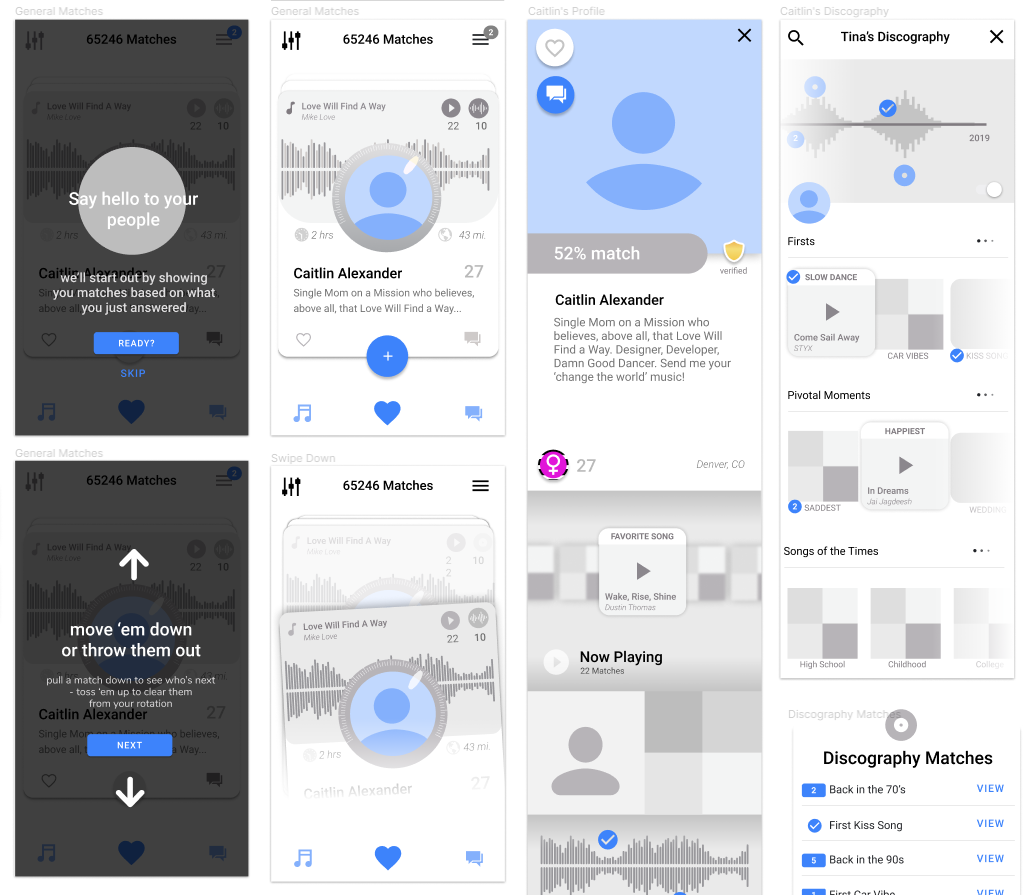
With our sitemap complete I turned to the wireframe process. Wireframing for an app proved to be very different than wireframing for web, but I enjoyed the challenge.
During this process we brought in our first developer to be a part of the discussion. My hope was by including our developer in this leg of the process, that the designs would be that much more achievable and require less rework moving forward.
I was able to map out each feature discussed in our feature list and collaborated with my team until we reached a consensus on the final layout.
Branding
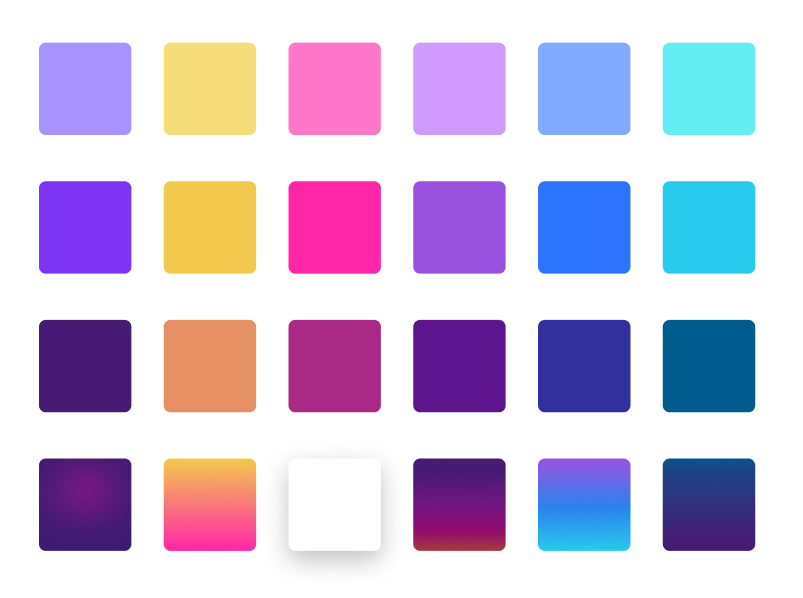
With the wireframe complete and our developer working on production, I turned to the branding process. I began by discussing our look and feel with the team before creating mood boards to discuss.
Voice
Friendly, Punny, Approachable, Warm, Sexy, Safe
Design
Musical, at-a-concert vibe. Gradient sections for music, white space for information. Funky vector illustrations. Photos with gradient filders.
Inspiration
Concert lights, Mix tables / DJ Gear, Concert Posters, Google Illustration styles, Neon Signs
The Logo
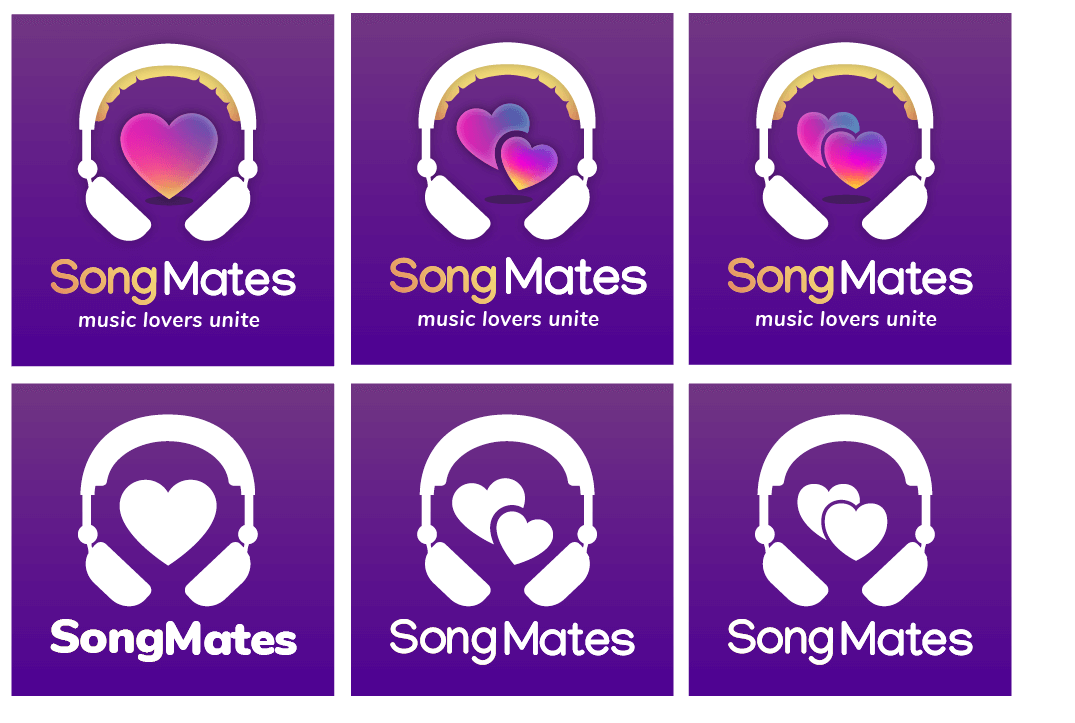
We began with the name Song Mates, with our first chosen logo below. I knew I wanted a heart with headphones from the inception of this project, though we did try some other options at first.
After coming across unfortunate trademark news we shifted gears and considered many potential names before landing on Press Play. This was the point we added our signature play icon to the heart of our logo. Shortly after I conducted a small redesign in 2021 to smooth and refine the logo once more.
Prototype 1.0
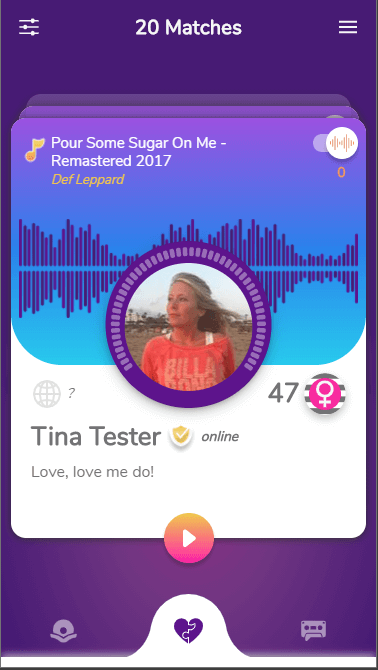
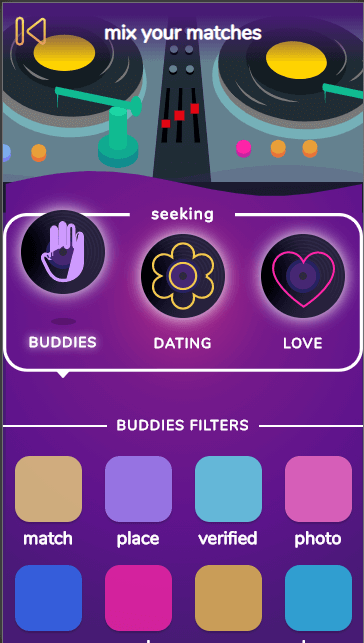
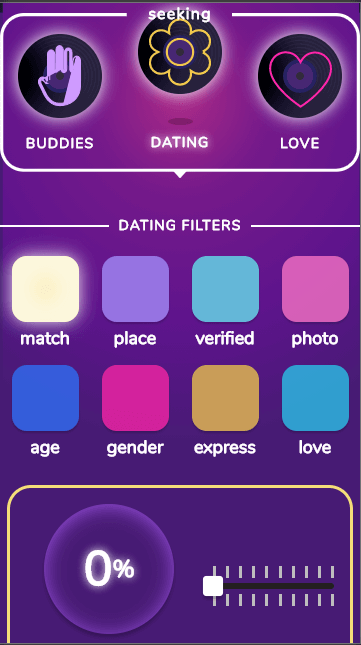
With the wireframe and branding complete, I turned towards making a fully rendered prototype. Each step of the way collaborating with our full team to ensure the design and functionality was in alignment with our goals and resources.
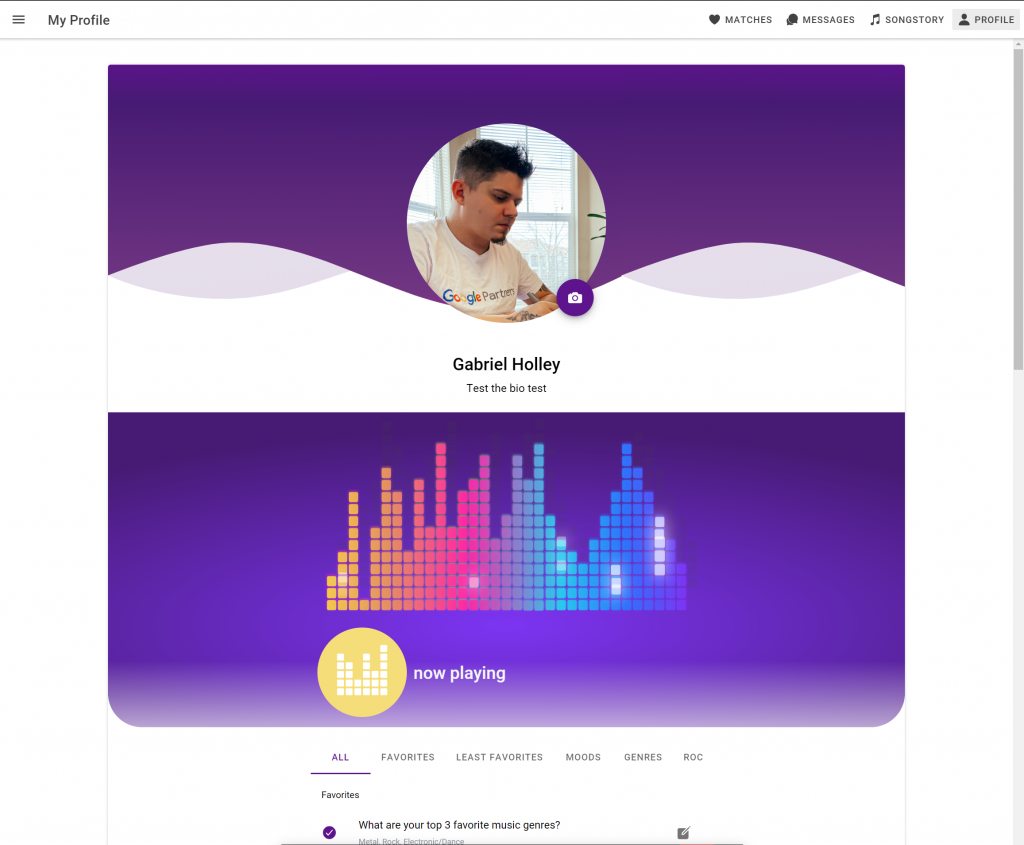
This first prototype, my first full app design, is admittedly now a bit clunky and over-designed.
Keep scrolling to watch as the app transform.
Development
Round 1
As mentioned, our first developer was brought into the project as a consultant during the ideation stage. As we mapped out each feature in our proposed MVP, we tasked him with keeping track of what was possible and what the architecture of the app needed be to support the full scope of the project.
At our request, and based on our previous experience with Gratiu, this first iteration was created using the Ionic framework in VUE.
Around the time we had completed the sign up, soundcheck, songstory, matches, and were in the midst of developing messages, it became clear that unfortunately there was a disconnect in communication with our developer.
When presented with an additional quote to complete the work months after the deadline, our team chose to part ways with the developer.
Round 2
After parting ways with our first developer, I was tasked with finding and hiring our next developer and onboarding him onto the project.
We hoped to find someone who could take the project on in it’s current state and complete it. Unfortunately, our previous developer owned our firebase account and shut it down when he left. I worked with multiple developers at first to try to restore the architecture, and even after receiving help from the previous developer we ultimately chose to begin the project again.
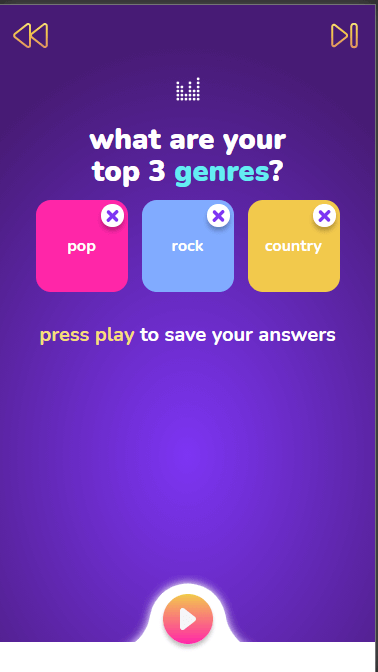
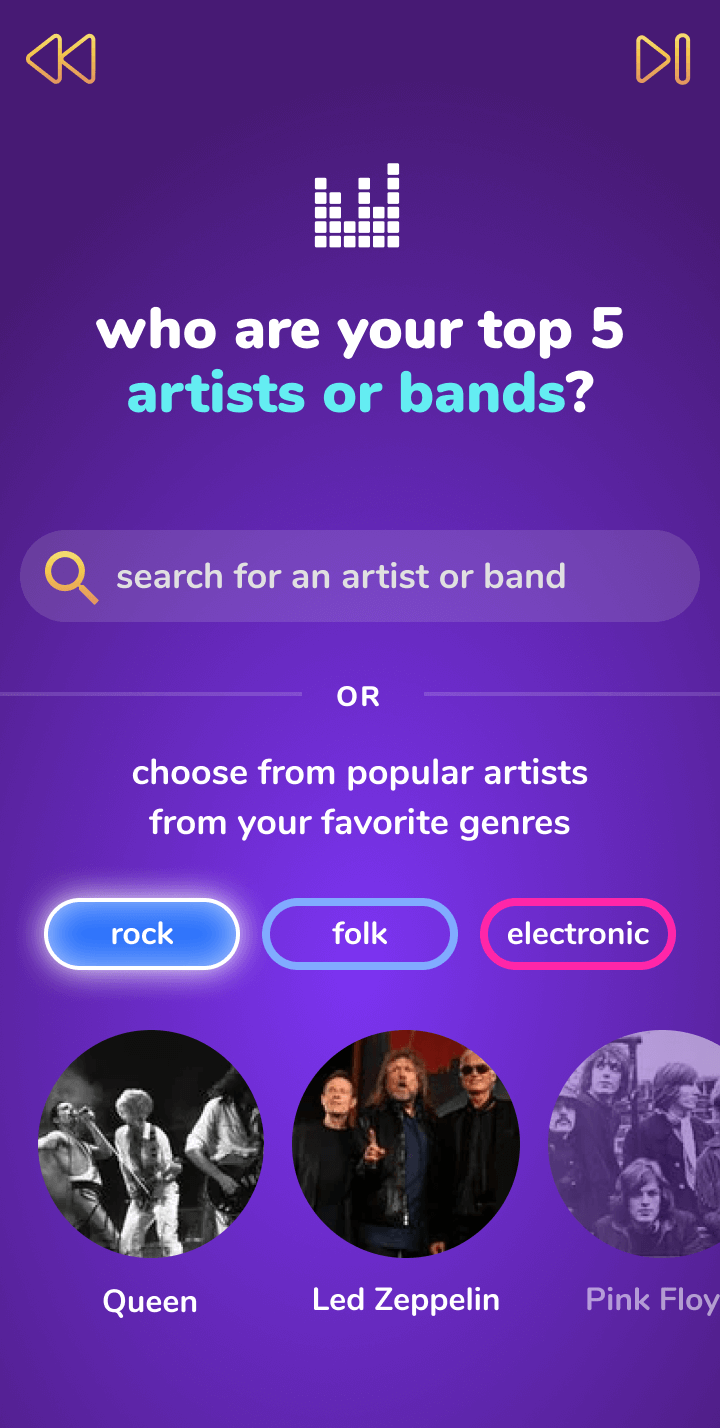
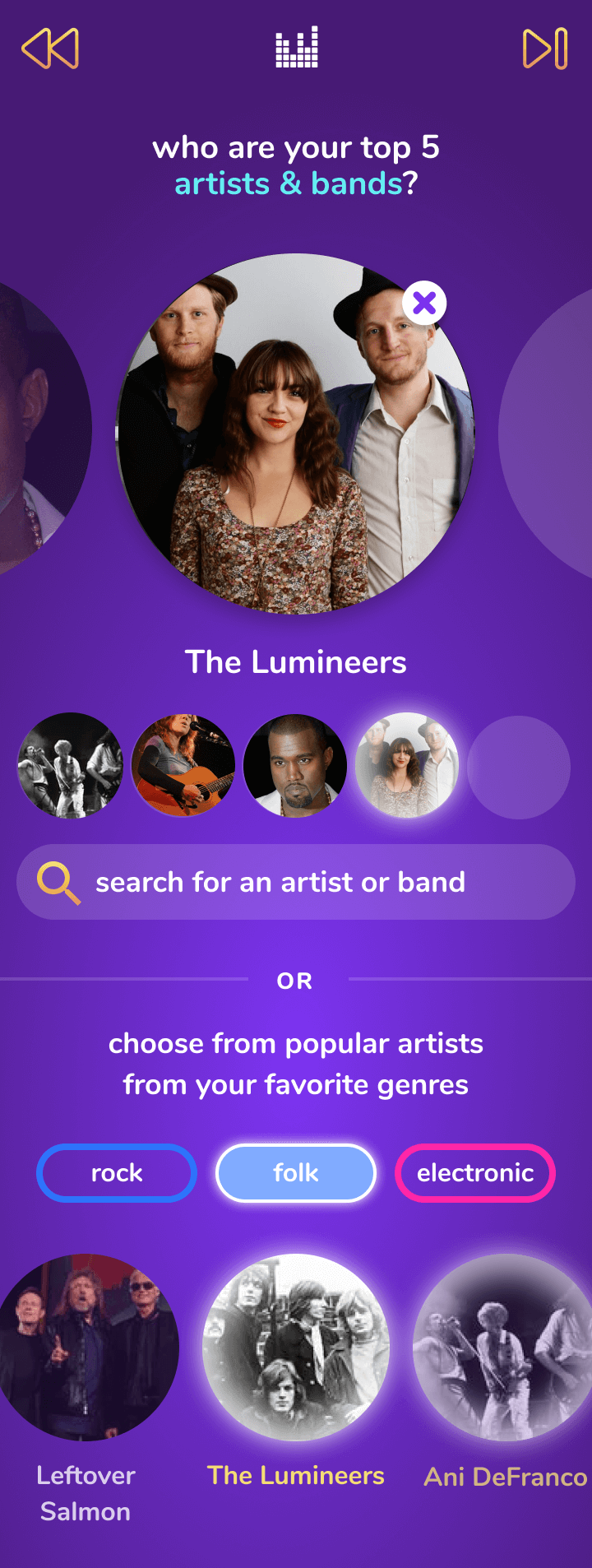
I hired a developer from Seattle and we followed a more structured product management style.
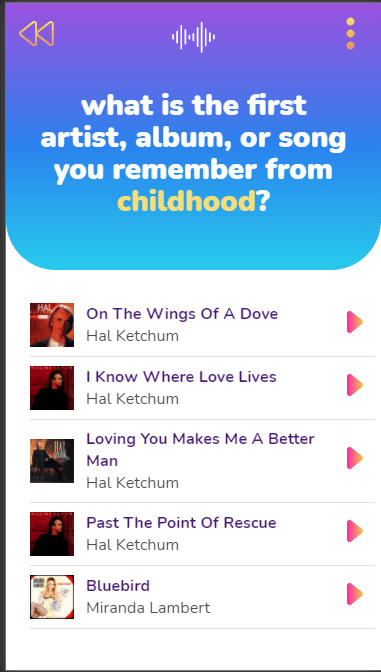
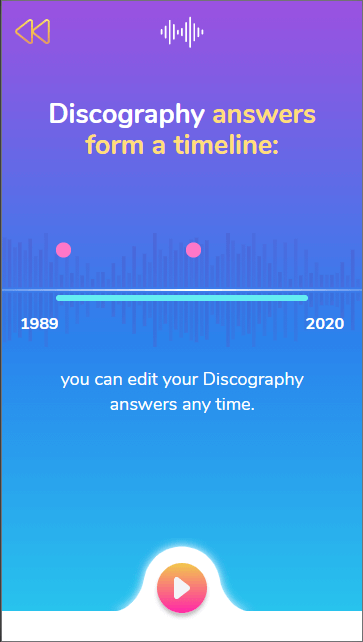
Development Management
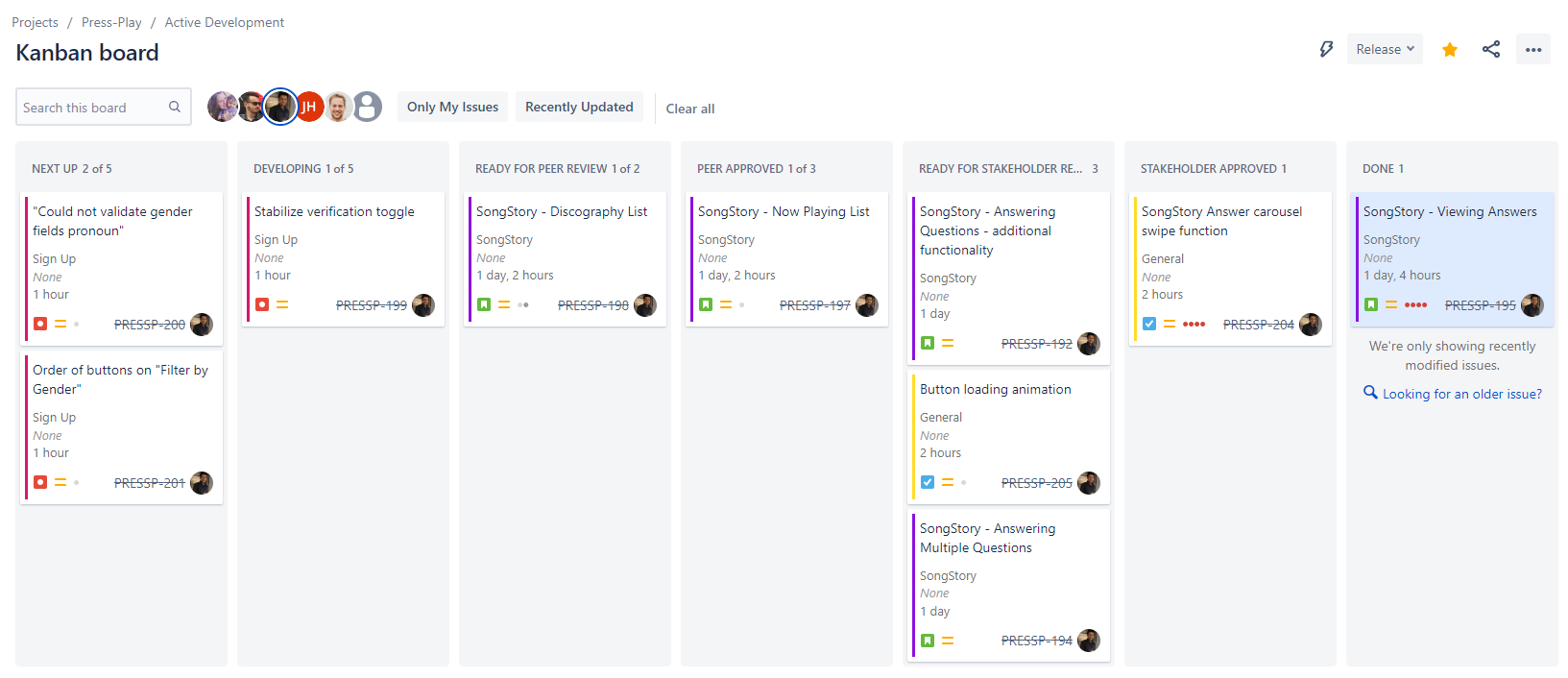
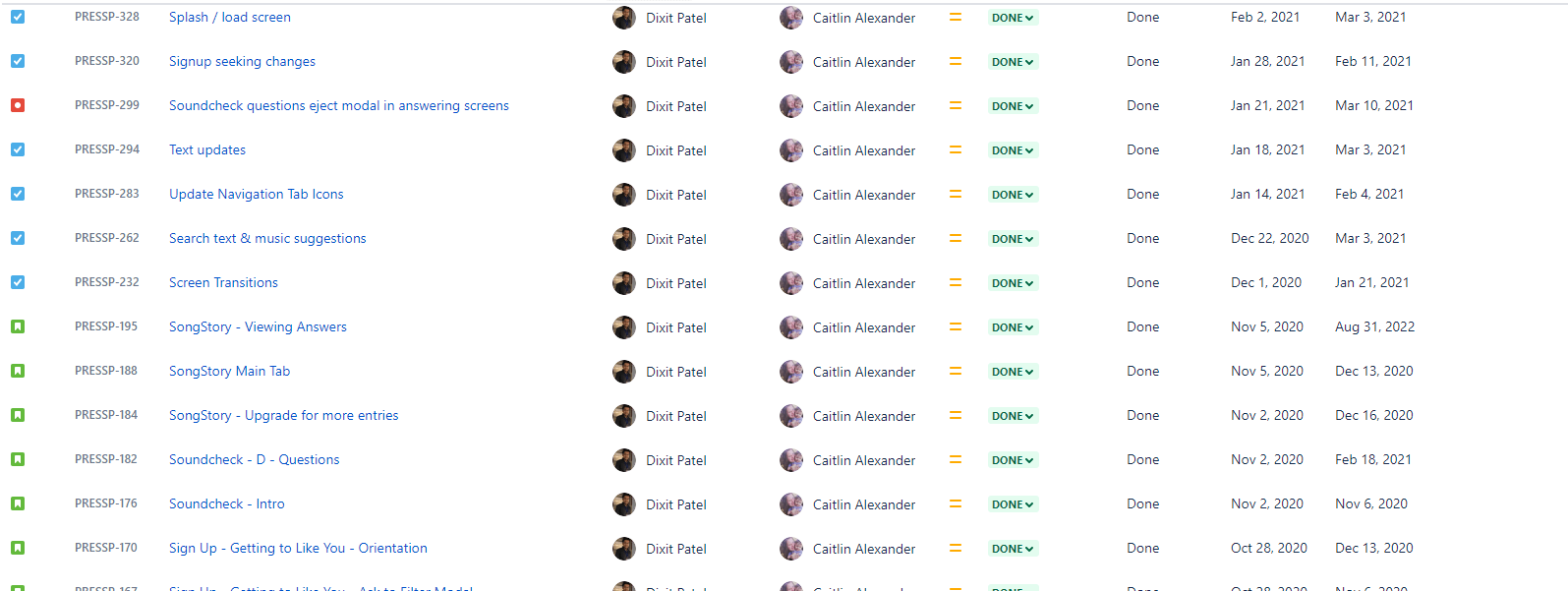
Through mentorship with our recently onboarded CTO, I was taught how to write acceptance criteria, create, estimate, and manage tasks through the Jira Kanban board system. I found this process to be extremely rewarding – I always knew exactly what the status of our project was, and while it took a lot of time, our developer always had clear expectations.
I handled this developer’s weekly payments as well – basing his pay on the time we agreed each task would take and a 50/30/20 rule – 50% pay for a task ready for peer review, 30% more for a task ready for stakeholder review, and the additional 20% when approved by the full team. This motivated our developer to move tasks across the board and gave comfort to our financial backer who could see exactly where each dollar was going.

Round 3
While development was moving forward and the product was functioning as promised, we decided to hire a couple additional developers that our CTO reccomended. These were top-notch developers and product managers that we hired part-time to support the development process. One of my concerns was that I while I could test the app from the frontend, I didn’t have much visibility ‘under the hood’ and we hoped more peer review in the code would assure us of a stable launch.
As our new developers dove into the code and began working with our existing developer, more and more concerns began to arise over the code quality and the tech stack in general. Our new developers felt strongly that the app should be redesigned in React Native and – once again – built from the ground up.
After much lengthy discussion and a few issues arising with our second developer, we let him go and asked our two most recent developers to begin the project in React Native. As we were eager to begin user testing, I came up with a plan to test after each major section was completed. We called these ‘Beats’.
Beat 0
Beat 0 was called this because it really exists outside the true Press Play experience – it’s actually a part of the sign up process.
We had a strong goal to be accepted as an inclusive, safe application for the LGBTQIA+ community through our understanding of their closeness with the music and dating communities. I developed a UI I hoped would be well-received by the community.
Our team secured a booth at Pride in Fort Wayne, Indiana and decided to test this UI with the attendees there. After completing the sign up process, attendees would hand the tablet to a button maker who would recreate their badge on a pinback button.
We were able to gather +220 email addresses through this process, and surveyed these users to get feedback on the new UI.
57.1%
Feels Like Me
The majority said they felt very well represented by their badge. All of the rest responded “It’s pretty close.”
85.7%
More Inclusive
Respondents felt this sign up experience was more inclusive than the typical process they’re used to.
71.4%
Innovative
Respondents said it was an innovate approach – unique to anything they had seen before.
100%
Safe & Easy
Every respondent said they would feel safe using and displaying their badge on the app, and that it was easy to do.
Beat 1
After the success of Beat 0, we were eager to begin (re)developing the core of our application with our new team and tech stack.
Beat 1 consists of the sign-up process and songstory, without matching, messaging, or the identity badge from Beat 0 (since there’s no context for it to matter here).
We launched this experience at a launch party in downtown LA and delivered live Songstory results to the DJ to mix everyone’s music into the night’s set. Users got a free shot for signing up and new that their matches had been in the same room with them that night.
Pivoting
A Greater Vision
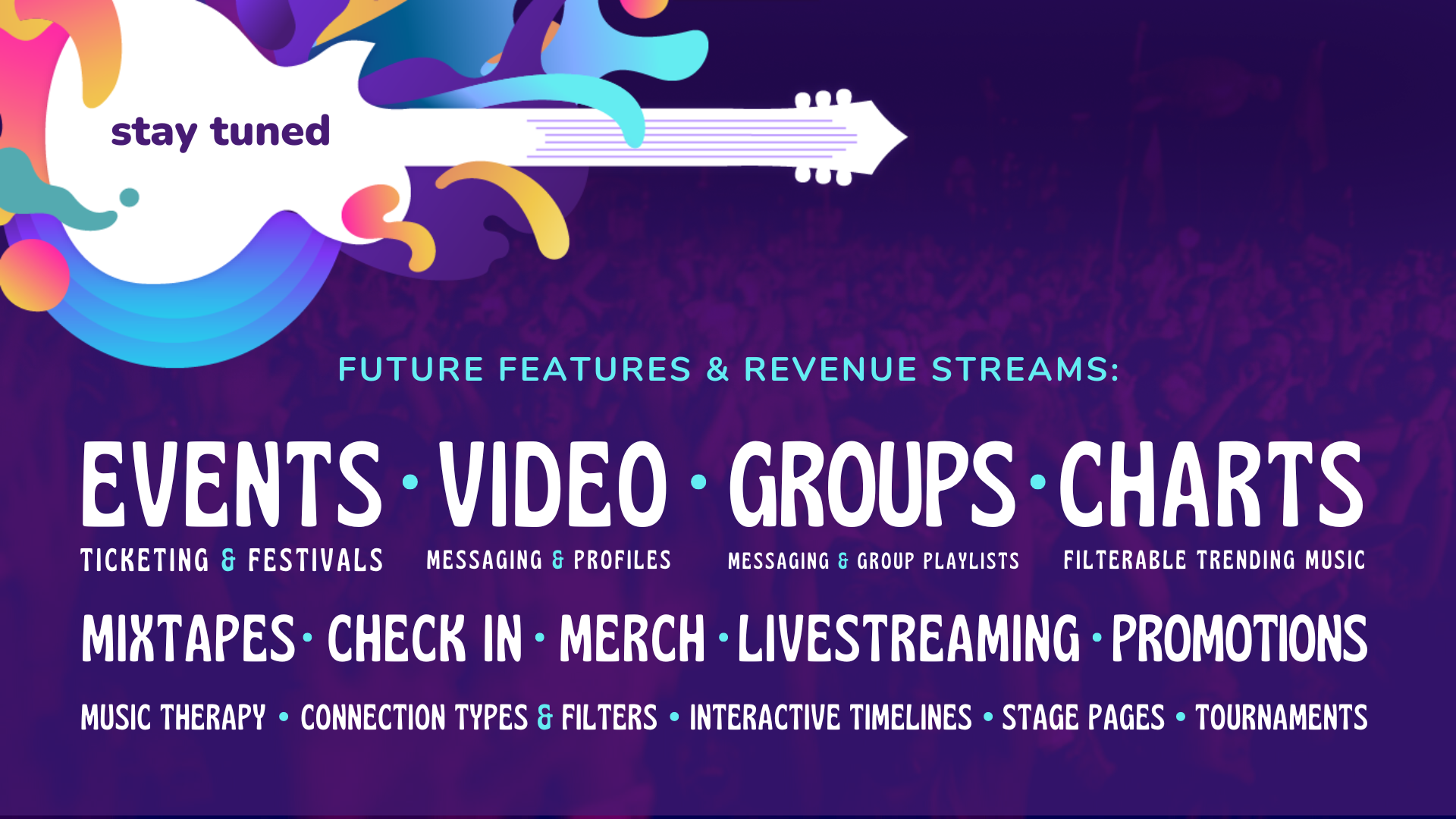
As we began to share Press Play with the world, it became clear that our target audience would be a hard sell for anything that felt like a “dating app”. We also began to understand the greater context Press Play (in particular, the Songstory) had through music & connection to change lives.
We began researching Gen Z in particular and discovered they were more interested in strong friendships and community building than hopping into a music-fueled hookup.
This opened a gateway to a vast array of future features and a broader mission statement, which we hoped would allow our users more freedom in guiding our direction as we grew.
A Smaller MVP
At the same time our vision grew beyond ‘just a dating app’, it was once again time to reconsider our development strategy. Developing Beat 0 and Beat 1 gave us valuable feedback, but didn’t fully illustrate our proof of concept. Development with our part-time team wasn’t going as quickly as we’d hoped and we weren’t in a position to hire salaried developers.
So, the team made the difficult decision to approach a new development company. The first step in this was to revisit our current prototype and strip absolutely everything ‘nonessential’ to proof of concept.
This is the resulting prototype.
Business skills
Financial
I assisted in the process of calculating, formulating, and visually displaying our financial projections.
I supported Tina during the budgeting process by creating Google Sheets with the proper formulas & organization to easily modify numbers and instantly see the impact.
I also created our innovative “Pay per Play” token model to manage the cost of music streaming on our platform. Users would theoretically pay $0.01 per song stream over 30 seconds. Tokens would be built into premium subscriptions and 100% of Token revenue would be used to pay for the music (in contrast to Spotify’s $0.0003 at the time!)
Legal
As a part of my role, I participated in much of our legal discussion – including everything from trademarks, to patents, to music licensing.
I provided documentation, graphic samples, input & ideas and reviewed resulting legal documents for accuracy.
While I often deferred to the wisdom of my co-founders and advisor’s expertise, I enjoyed being an active participant and learning a great deal about both business and entertainment law.
7 Trademarks
Including logos, taglines, and a playing card game.
2 Patents
For our identity badge and music-based social application.
2 Copyrights
For our app and card game.
3 Term Sheets
For music licensing contracts with the top 3 record labels – Sony, UMG & Warner.
Technical
As a part of my role I assisted the technical team in product management, defining business logic, quality assurance, and occasionally hiring.
Algorithm
I created a working example of a simplified match algorithm in Google Sheets. This was the original implementation.
We later provided this framework to Clint ____ who recreated the concept to the current implementation which includes a nearest-neighbor algorithm which factors in likes, dislikes, fuzzy and exact matches based on detailed music metadata.
Technical Due Diligence
During our licensing negotiations with Universal Music Group, we were asked to complete some Technical Due Diligence to describe how we would stream UMG content while keeping it safe.
This process involved weeks of research to determine our best content streaming partners and many discussions with our technical team on the best ways to move forward.
Marketing
Press Play never put significant dollars into marketing, in hopes of growing through investment and organic growth until we were ready to implement our revenue models. Though we hoped to find a team member with more marketing experience to lead our campaign, that became my role for some time.
Content Calendar
I began by creating Google Sheets content calendars to get a feel for what kind of system would work for our team.
Each week I would lead a discussion with our small content creation team on posts for the following 2 weeks and any larger projects.
After some time I transitioned to Loomly, in order to utilize features like post suggestions, repeating posts, cross-platform post scheduling, hashtag search, and analytics.
2 Patents
Social Content
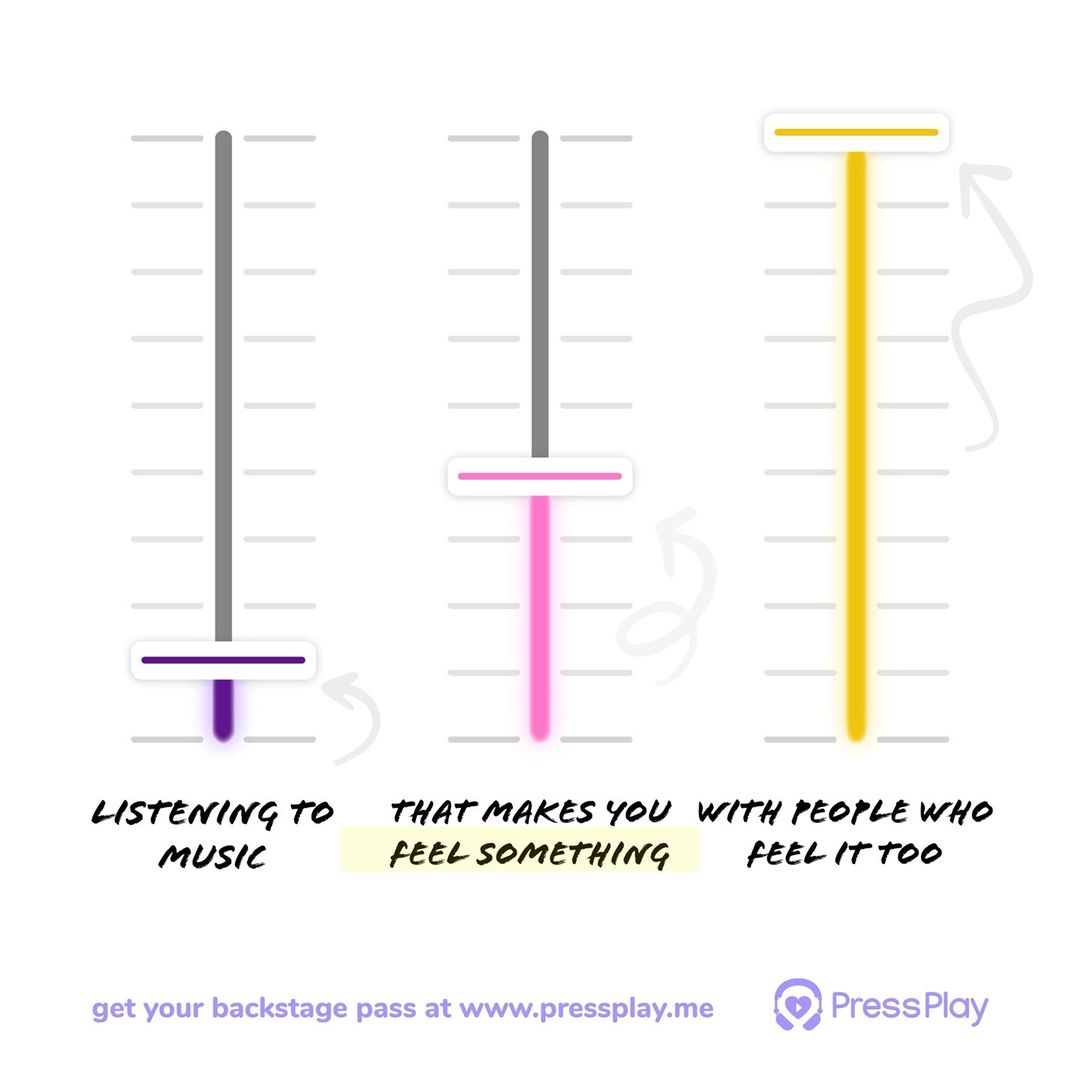
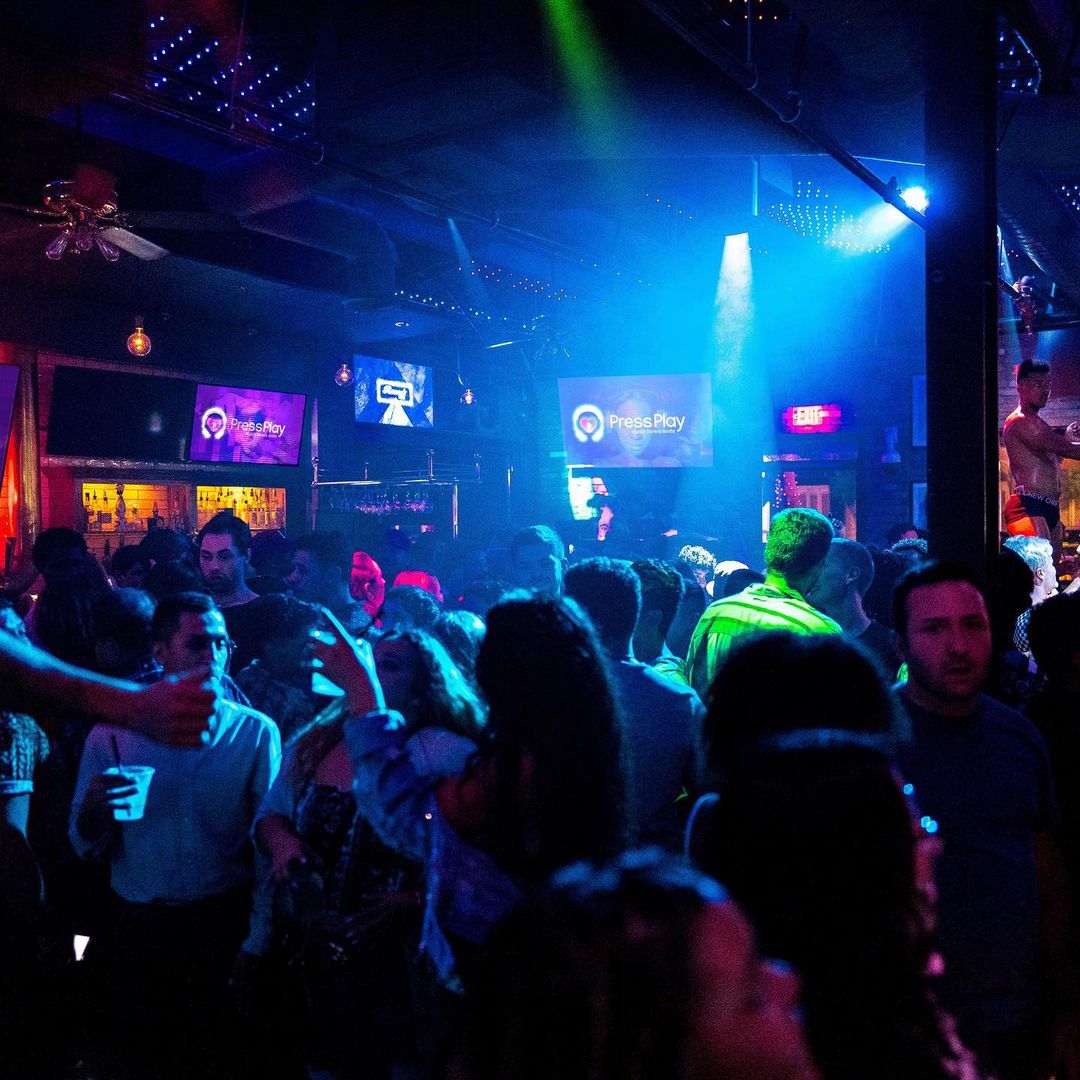
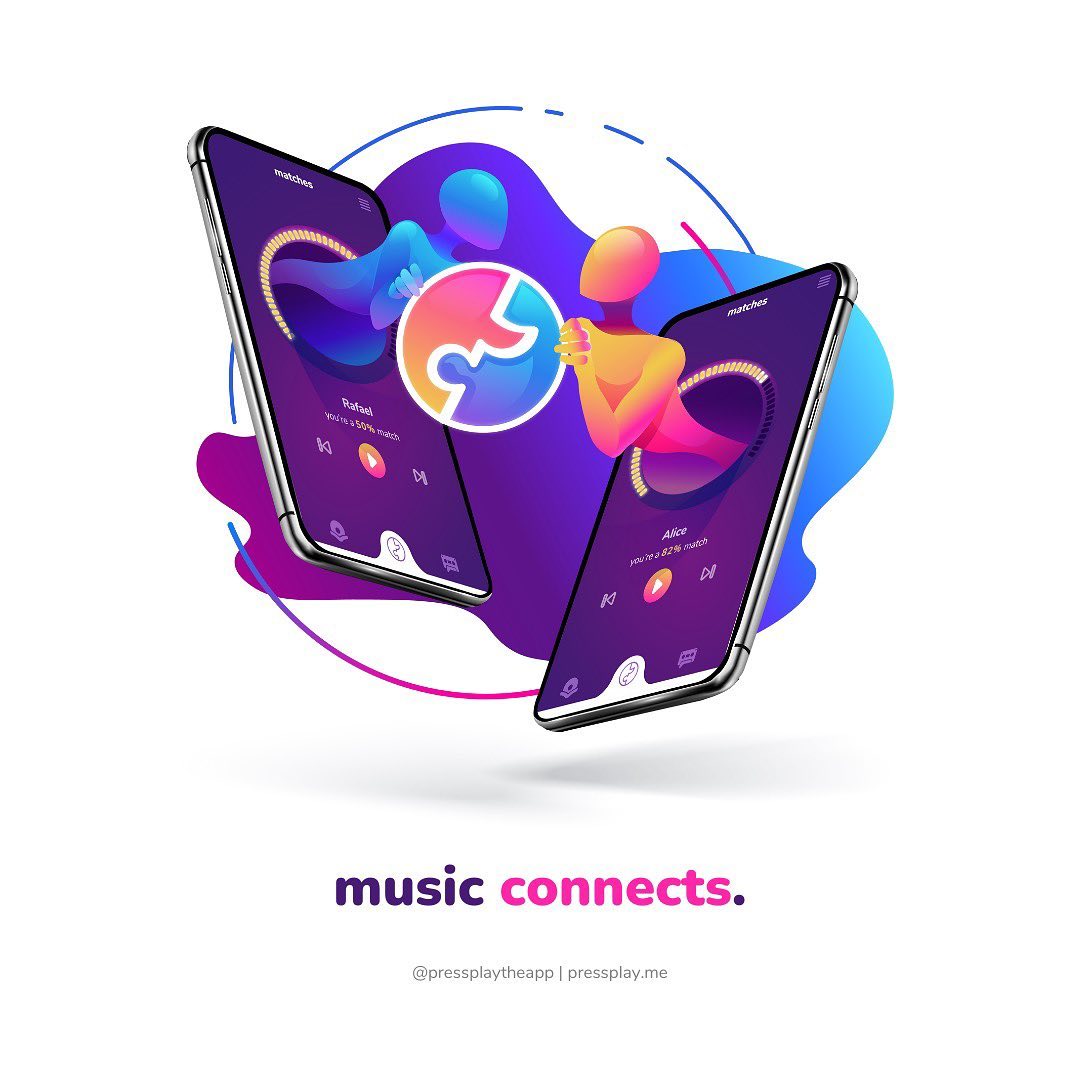
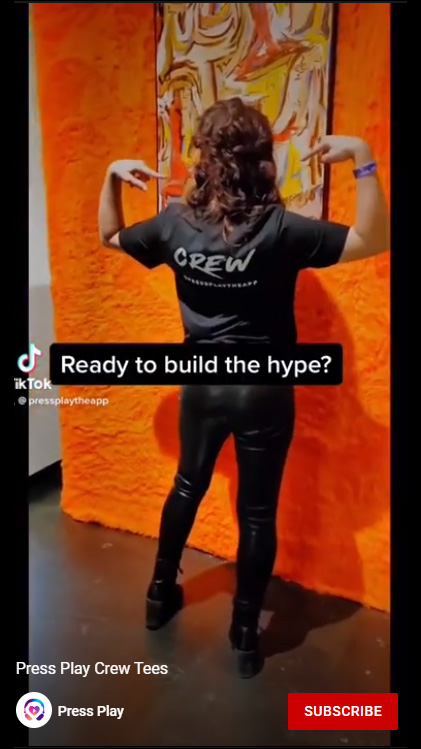
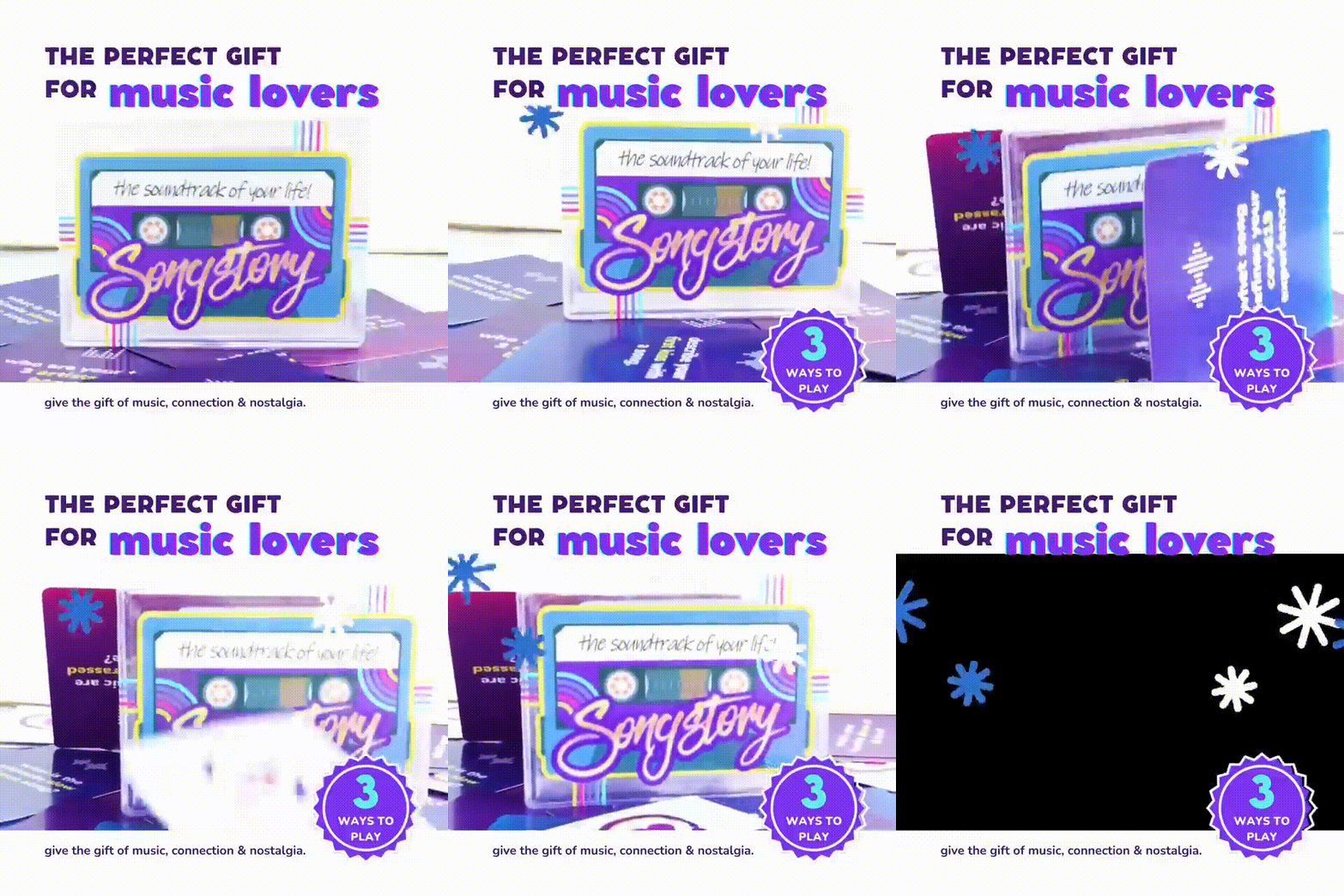
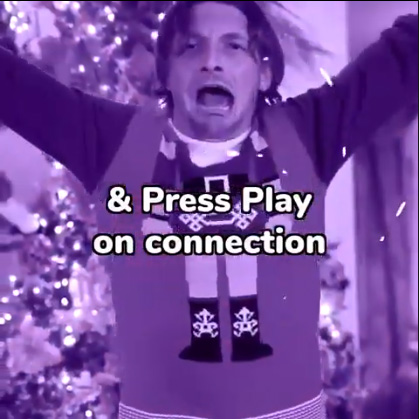
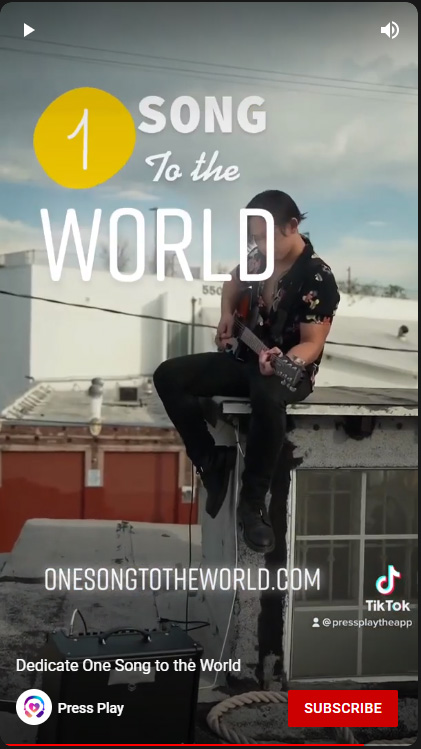
In addition to planning the calendar, I also created content in collaboration with my team. We experimented a lot with various media and style.
Favorite Images
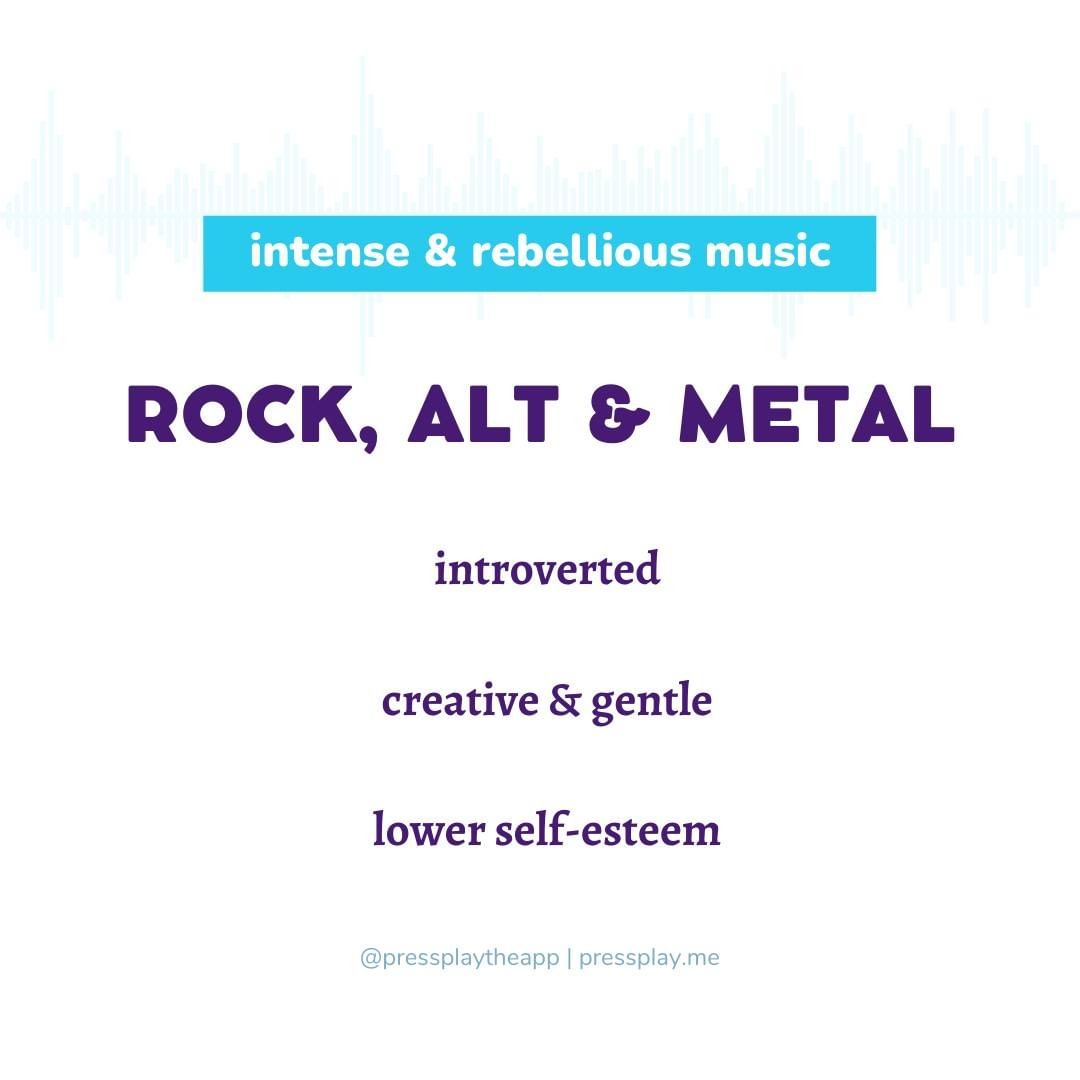
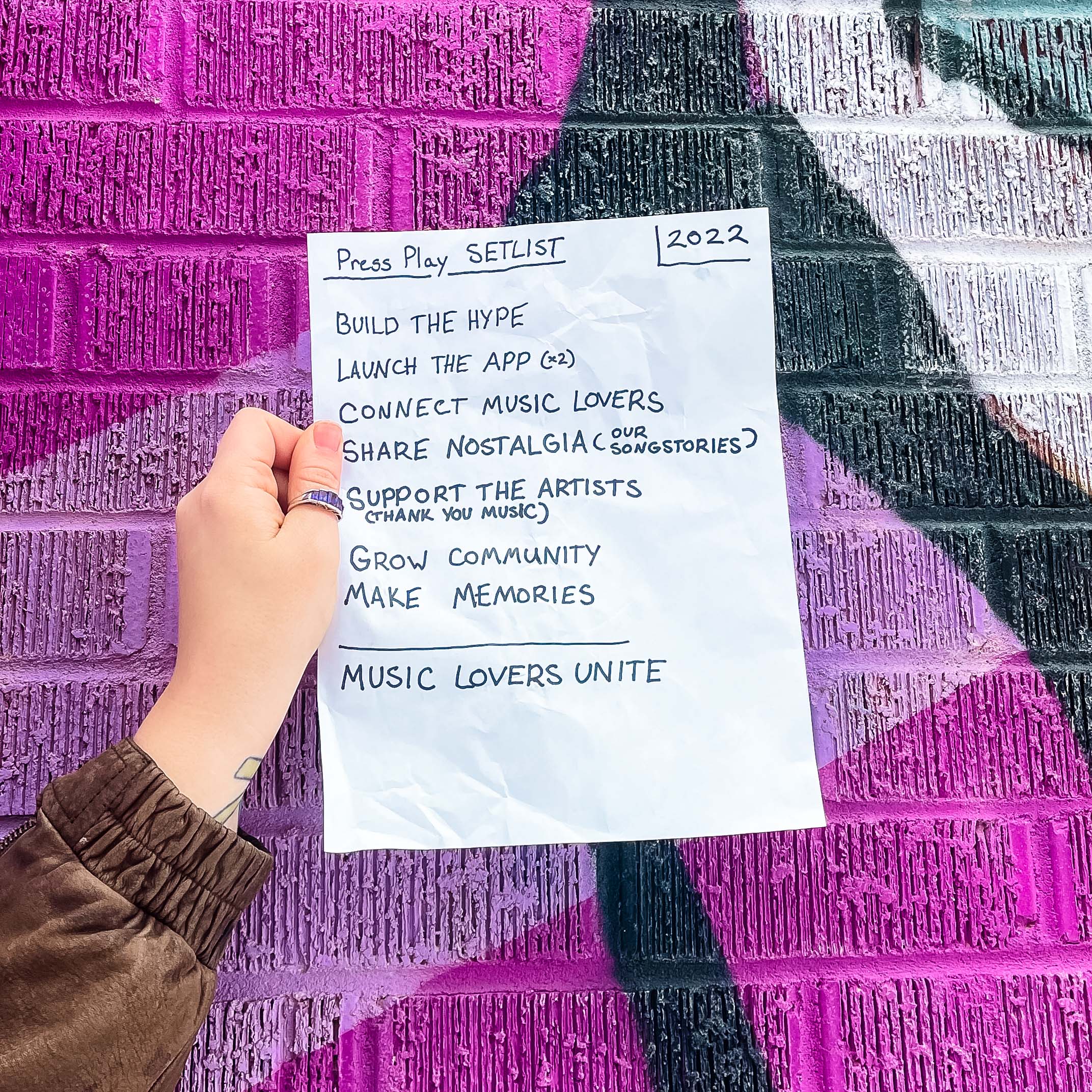
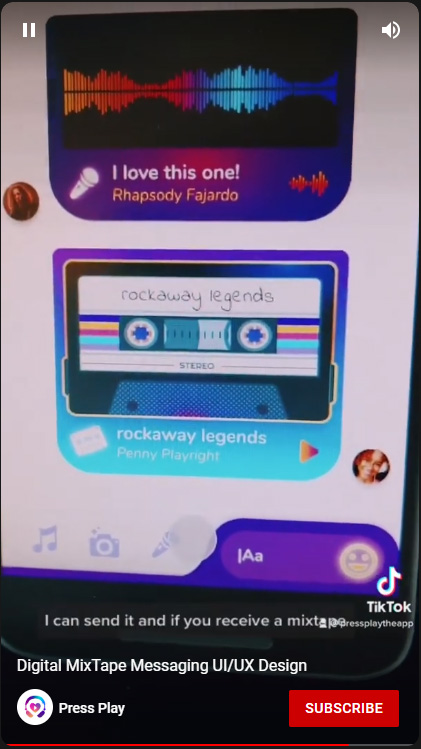
Short-form Video
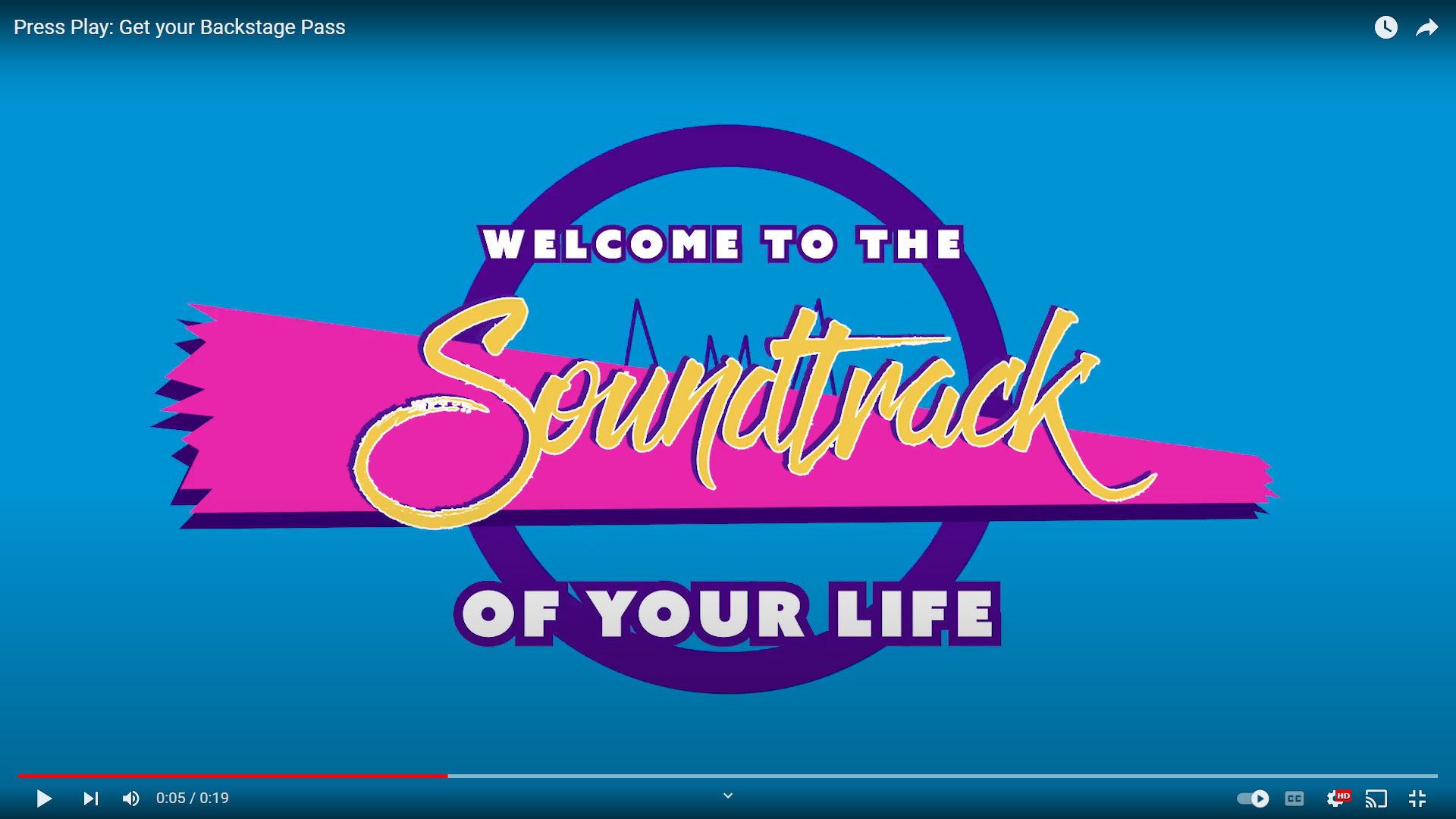
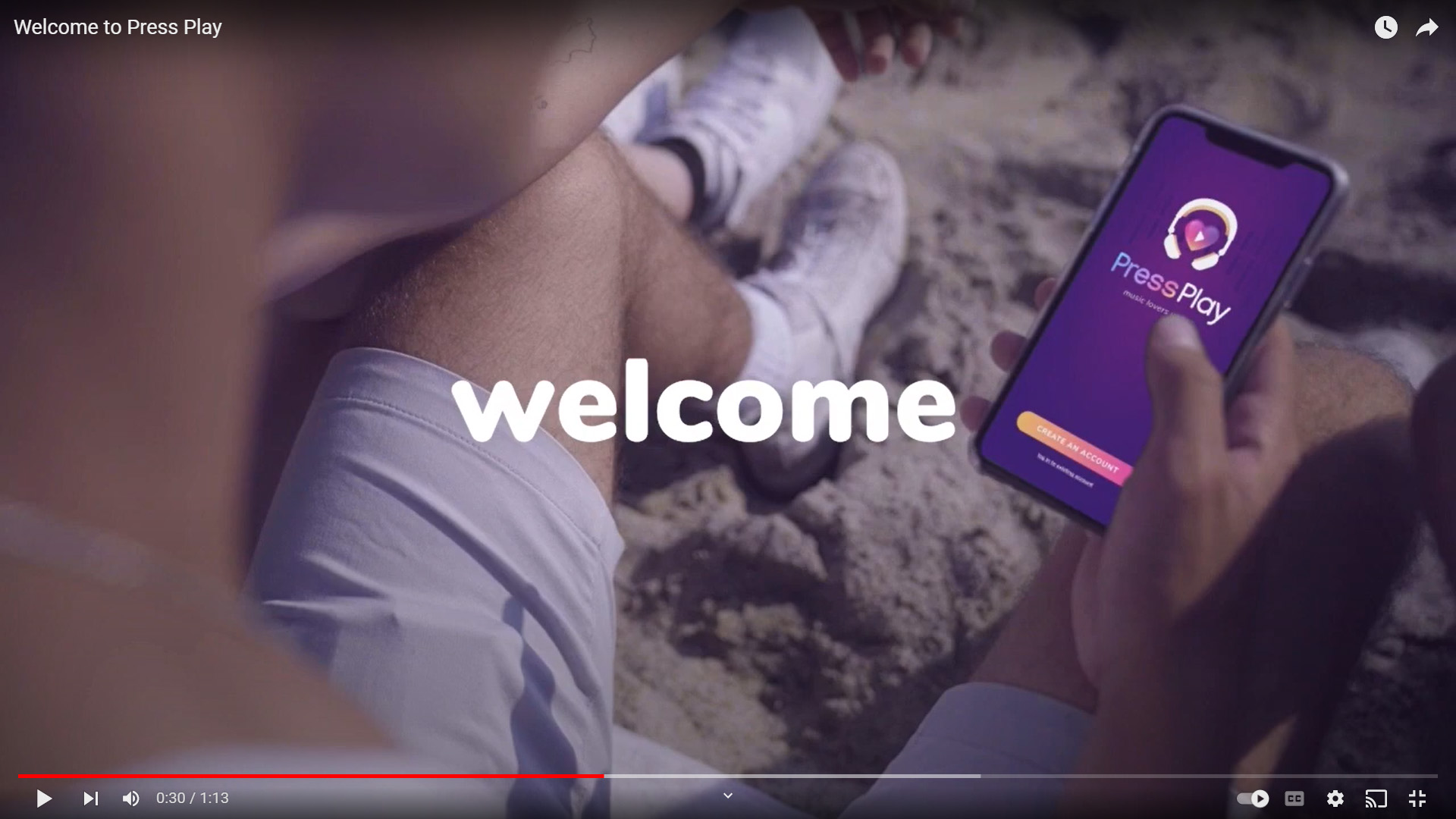
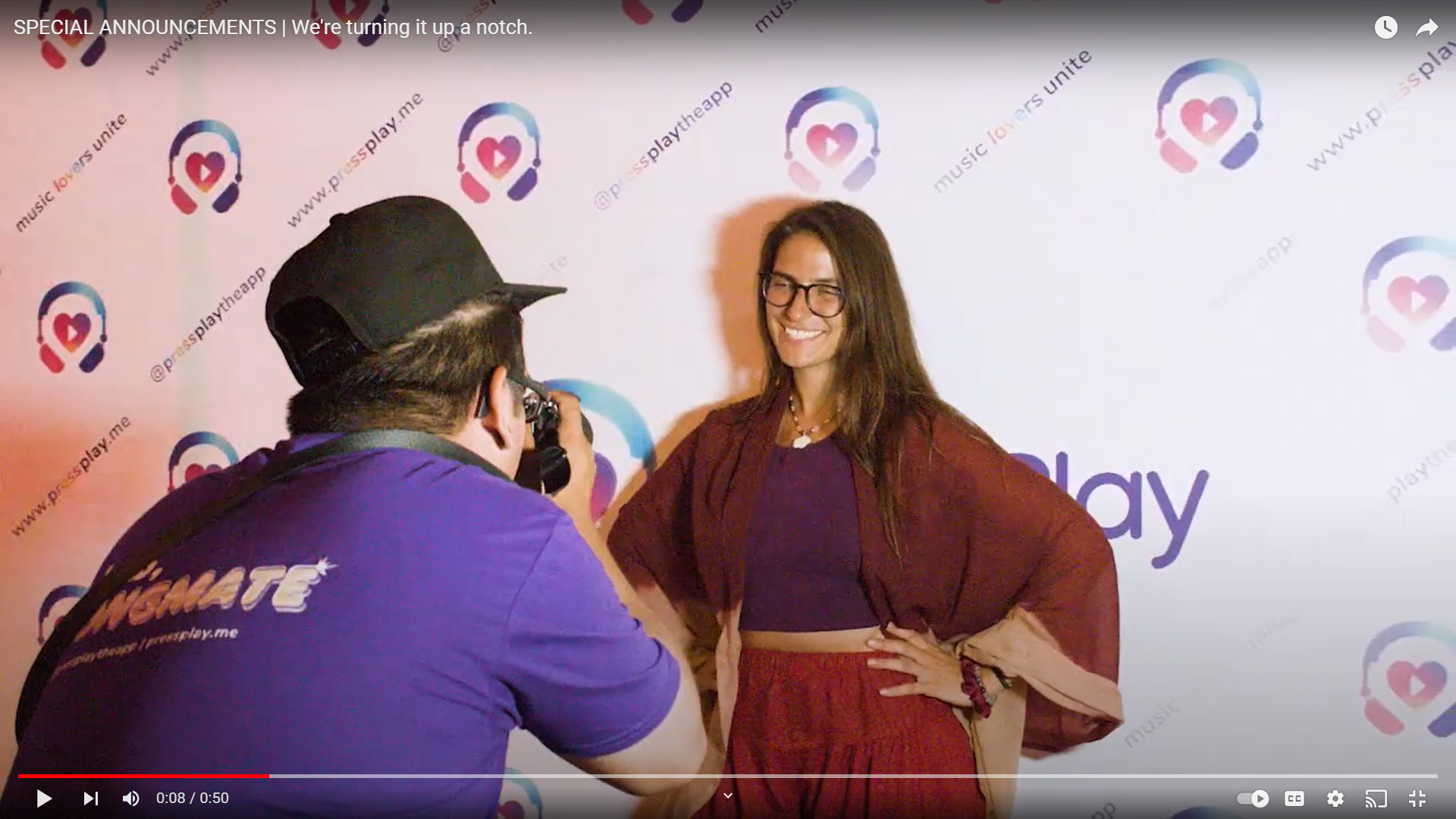
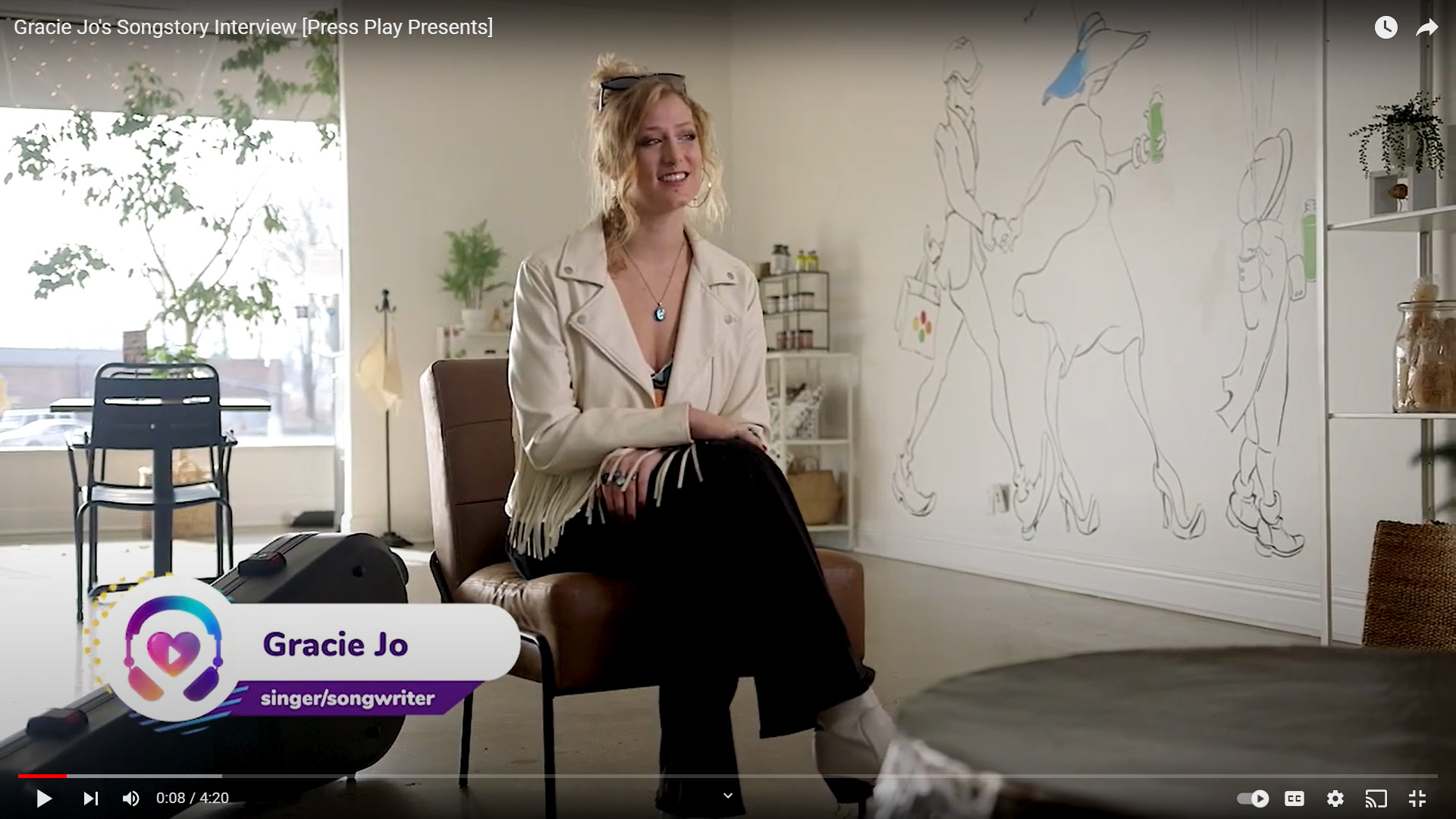
Video Editing
& Motion Graphics
One of the great joys and challenges of my work was video editing and motion graphics for marketing content.
My work ranged from creative direction, to editing and motion graphics. We used a combination of footage from our videography team and some stock. Some videos were edited by myself, some by the videographer.
I contributed all motion graphics / animations.
Presentation
Pitch Deck
I worked with my fellow co-founders and our advisory team on what seems like countless iterations of this pitch deck, including modified decks for pitching to investors, musicians, record labels, venues, and everyday people.
While I wrote the copy and created the design, I relied on the rest of my team for content definition and organization.
We presented variations of this deck to secure advisory board members, teammates, partnerships, and investment interest.
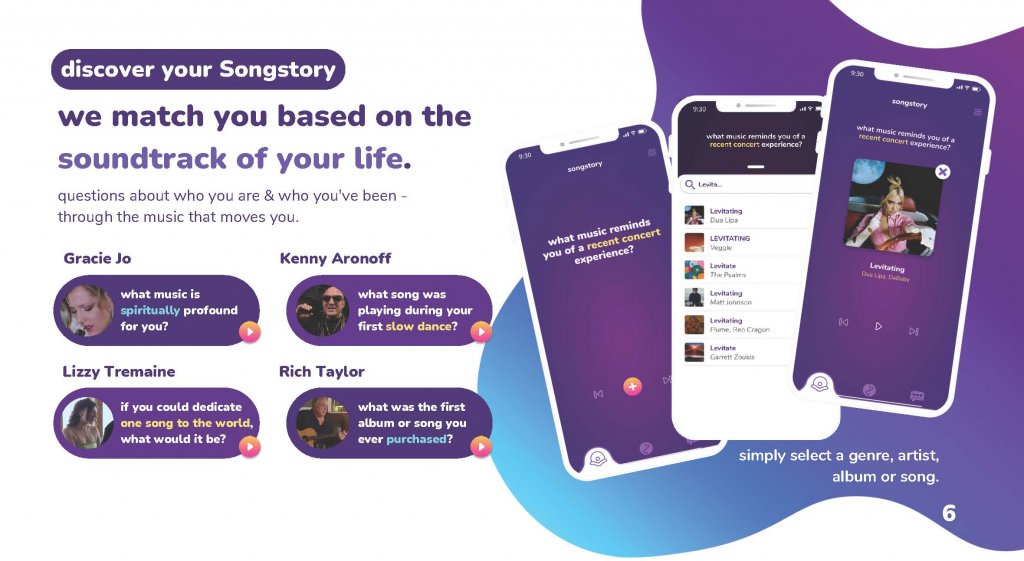
GDI Presentation
We had the opportunity to partner with Global Dating Insights for their 2022 NYC Conference. As a part of our sponsorship package, we flexed our marketing muscles through presenting a webinar, operating a booth and presenting at a convention, and joining GDI for a podcast.
I was tasked with creating these presentations, preparing our team, and presenting alongside Tina and Rich.
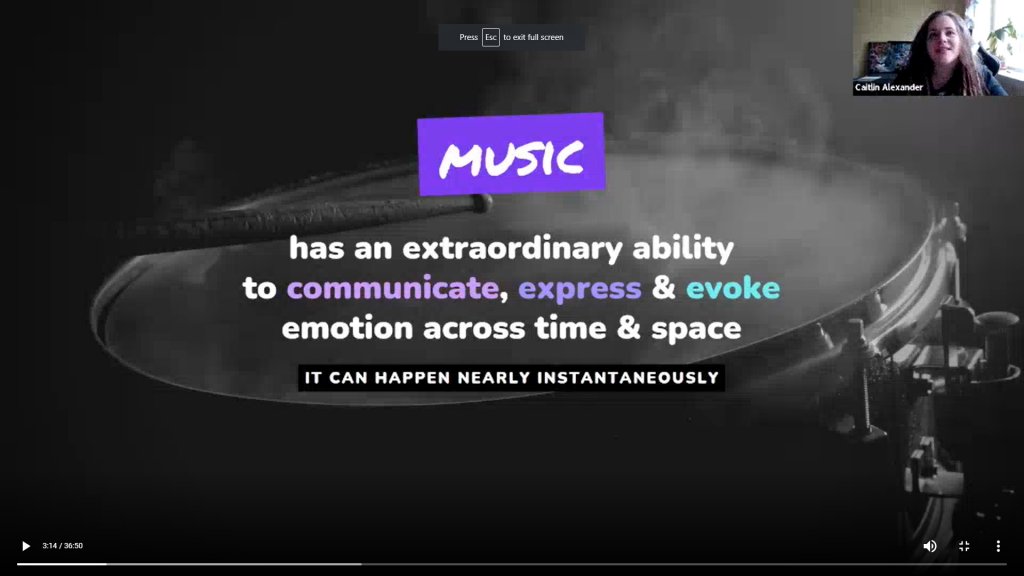
Webinar
You can clearly see our mission and vision take the lead in this webinar as we began exploring the full potential of Press Play’s impact.
Convention
We set up a booth with music-based community mural and gave a short interactive presentation that sparked instant connection in the crowd.
Podcast
We met with GDI again after the convention to record a Q&A podcast all about the power of music and our MVP launch.
Booths & Events
We had the opportunity to partner with Global Dating Insights for their 2022 NYC Conference. As a part of our sponsorship package, we flexed our marketing muscles through presenting a webinar, operating a booth and presenting at a convention, and joining GDI for a podcast.
I was tasked with creating these presentations, preparing our team, and presenting alongside Tina and Rich.
Pride 2021
You can clearly see our mission and vision take the lead in this webinar as we began exploring the full potential of Press Play’s impact.
Chapman's Brewery
We set up a booth with music-based community mural and gave a short interactive presentation that sparked instant connection in the crowd.
Rocco's Hollywood
We set up a booth with music-based community mural and gave a short interactive presentation that sparked instant connection in the crowd.
GDI NYC
You can clearly see our mission and vision take the lead in this webinar as we began exploring the full potential of Press Play’s impact.
Pride 2022
We set up a booth with music-based community mural and gave a short interactive presentation that sparked instant connection in the crowd.
Hippie Fest
We set up a booth with music-based community mural and gave a short interactive presentation that sparked instant connection in the crowd.
WeFunder
With an increased focus on community building and a growing, passionate fanbase, we decided to try our hand at crowdfunding our next investment round. Working with WeFunder meant we could accept investments as low as $100 and give a legal voice to our users.
I took ownership of the campaign video with collaboration with videographer Nick Henney of 323 Media. We pieced together the video a variety of footage we had on hand, voiceovers, and motion graphics.
I also created all the copy and graphics for the campaign story.
Results
We currently have a functioning MVP on both app stores, a variety of trademarks and patents, a card game, and a whole lot of hard-earned experience.
1200+ users
At the time of the completion of this case study, over 1200 users are active on Press Play between iOS and Android devices.
300k matches
Of 1200 users, there are over 300k combinations of matches between people that are 35% or above (according to our admin panel).
764 convos
While over 1500 conversations were initiated, about 50% of them (typical for dating apps) received a response and became conversations.
$35k Raised
A largely self-funded operation, Press Play has not exceeded the $50k min for WeFunder to launch our campaign to the general public.
Positives
- Learned new things – This project has been the most challenging to the breadth and depth of my skills. I encountered a new learning curve at nearly every turn. I worked with some of the most accomplished council and colleagues of my life.
As co-founders we were all ‘Sophomores’ to app development and made significant strides beyond our ‘Freshman’ applications. We had a lot of failures and a lot of successes. - Made an impact – We were repeatedly met by an overwhelmingly warm reception when out speaking with the public. Our mission and commitment to acceptance, authenticity, connection, and good vibes made an impression on the people we met, which in turn fueled our organic growth. We’ve shared Songstories and created spaces to celebrate music and community.
- Positive Work Culture – Our team became like family. Fueled by tenacity, passion, and loyalty there have been dozens of hardworking contributors to this project.
Our co-founder relationships were founded on deep respect, authenticity, and collaboration. We remain committed to honesty and cultivate a ‘thick skin’ and welcoming attitude to critique.
Possibilities
- Start Simpler – While I thought our first prototype was modest, it’s now clear that early concepts should be even more simple and functionally straightforward.
- MVP vs Concept Illustration – When it came time to strip the application as lean as possible, we focused on illustrating the concept “matching via music taste”. What we didn’t consider, was whether or not we were truly creating a user experience that would directly meet a need. What we created is at the core of many problem-solving future features we have planned, but isn’t as compelling as it could be.
I think additions like filters, music messages, Songstory charts, and verified profiles would drastically increase value. - Development – Challenges during development and multiple refactors caused significant setbacks. It may be wiser to invest significantly more resources into sourcing and compensation the right team from the start.
- UI/UX Reflections – Incorporating video to songstories, profiles and messages is a high priority, but so far too costly. I’d also love to do a full UI/UX study on a redesign.